
Our team begins by assessing every area that requires temporary protection and determining the appropriate poly plastic tarp for both vertical and horizontal applications. We evaluate the safest and least disruptive way to access the repair or construction zone so your business can continue to operate with minimal interruption.
All fire protection sprinkler systems remain fully unobstructed and compliant with applicable codes and regulations. Special precautions are taken around sensitive components such as lighting fixtures, HVAC systems, equipment, heat sources, and office infrastructure.
Once the layout is established, our crew secures the poly plastic tarping to vertical and horizontal surfaces using approved anchoring methods to create a durable, fully contained barrier. All seams are “stitched” together using zip ties — an overlapping, reinforced method that ensures continuous coverage and minimizes the risk of dust, debris, or water escape.
At project completion, we carefully remove all materials and either dispose of or recycle them responsibly, leaving the space clean, safe, and fully operational.
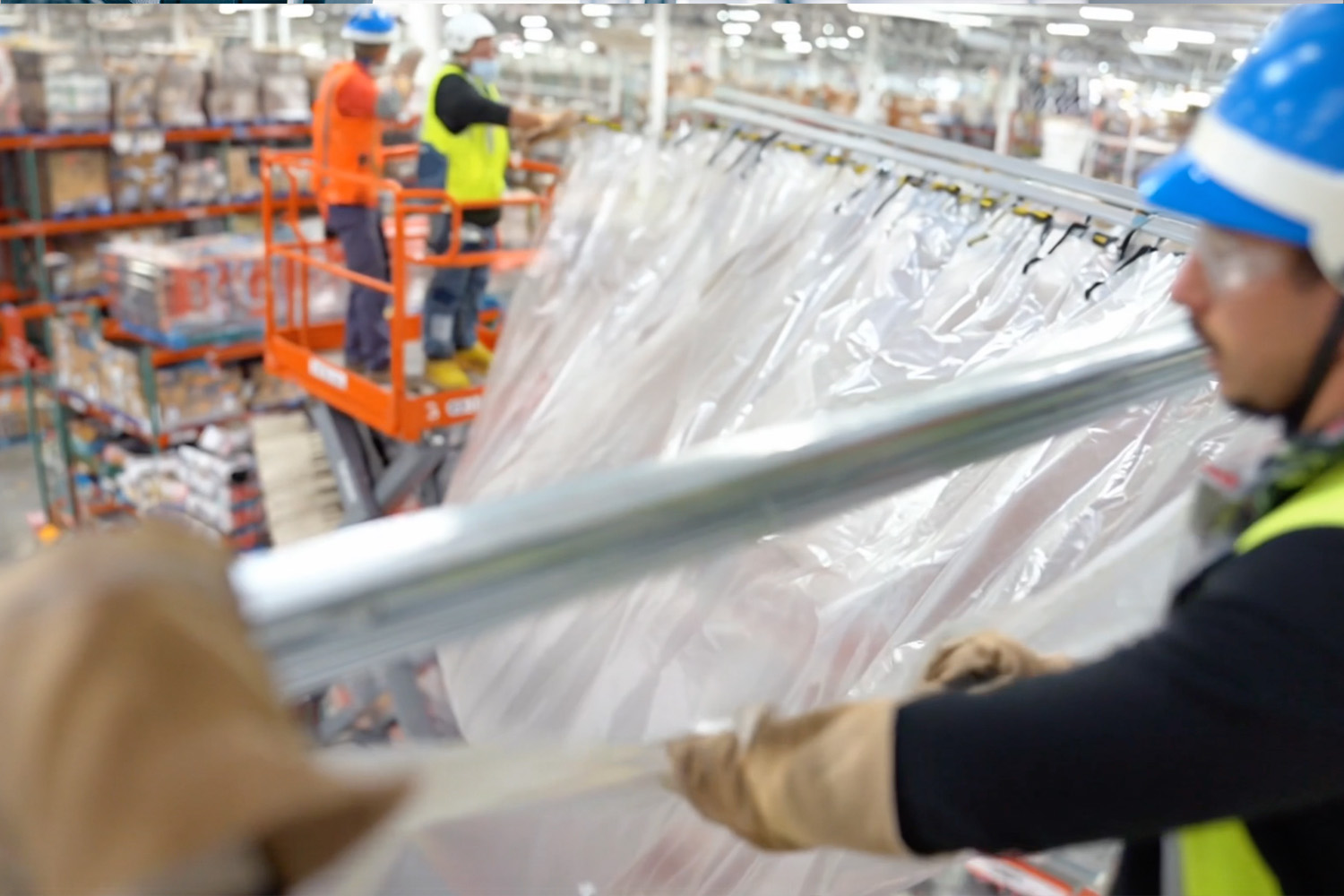
Evaluate the Area: Identify the dimensions and any potential hazards (e.g., lights, fire suppression systems, HVAC).
Determine Access Points: Plan the safest and least disruptive way to access the installation area.
Clear or Cover Equipment: Move or cover items around work zone to prevent damage.
Ensure Safety Measures: Use ladders, lifts, or scaffolding with proper fall protection.
Fire Sprinkler Compliance: Ensure all fire protection sprinkler heads remain unobstructed as required by code and guidelines.
Avoid Blocking Lights or Vents: Plan cutouts or drop-downs if necessary to allow normal function of building systems.
Drape Poly Sheeting or Tarps: Hang the plastic sheeting from the suspension wires, ensuring full coverage over the designated area.
Secure Edges: Zip ties, clips, or stitching methods (e.g., overlapping seams and zip-tying them) are used to join sheets and prevent gaps.
Seal Perimeters: Attach edges to walls or support structures to fully contain the area and prevent dust or debris escape.
Ensure Tension and Coverage: Confirm the tarp is secure and taut to avoid sagging or tearing.
Check Fire Compliance: Ensure sprinkler heads are visible and unobstructed.
Document Installation: Take photos and note materials used for client or regulatory documentation.
Safely Dismantle: After the work is complete, remove protection carefully, avoiding the release of dust or debris.
Clean Up: Remove all hardware and dispose of or recycle materials per site and local regulations.